
How to confirm denim wash colors: what to check from reference images to sample garments
Denim wash colors are often covered by a single reference image, but screen display, fabric differences, and washing processes can all cause the actual product to deviate from expectations. This article is aimed at brands and wholesale buyers, explaining the verification sequence from reference images to sample garment confirmation: first clarify what reference images can convey, then define fabric and washing process conditions, and finally use signed sample garments and records as the basis for bulk production.
Reference images cannot serve as color difference acceptance standards. Confirming denim wash colors should be based on washed sample garments signed by both parties, recording fabric, pre-wash and post-wash conditions, and observation light source.
In this article
What reference images can and cannot conveyWhy the same wash effect varies by fabricWhat to record at the sample garment stageWhat governs bulk productionDifferent confirmation paths for custom and available stylesNext steps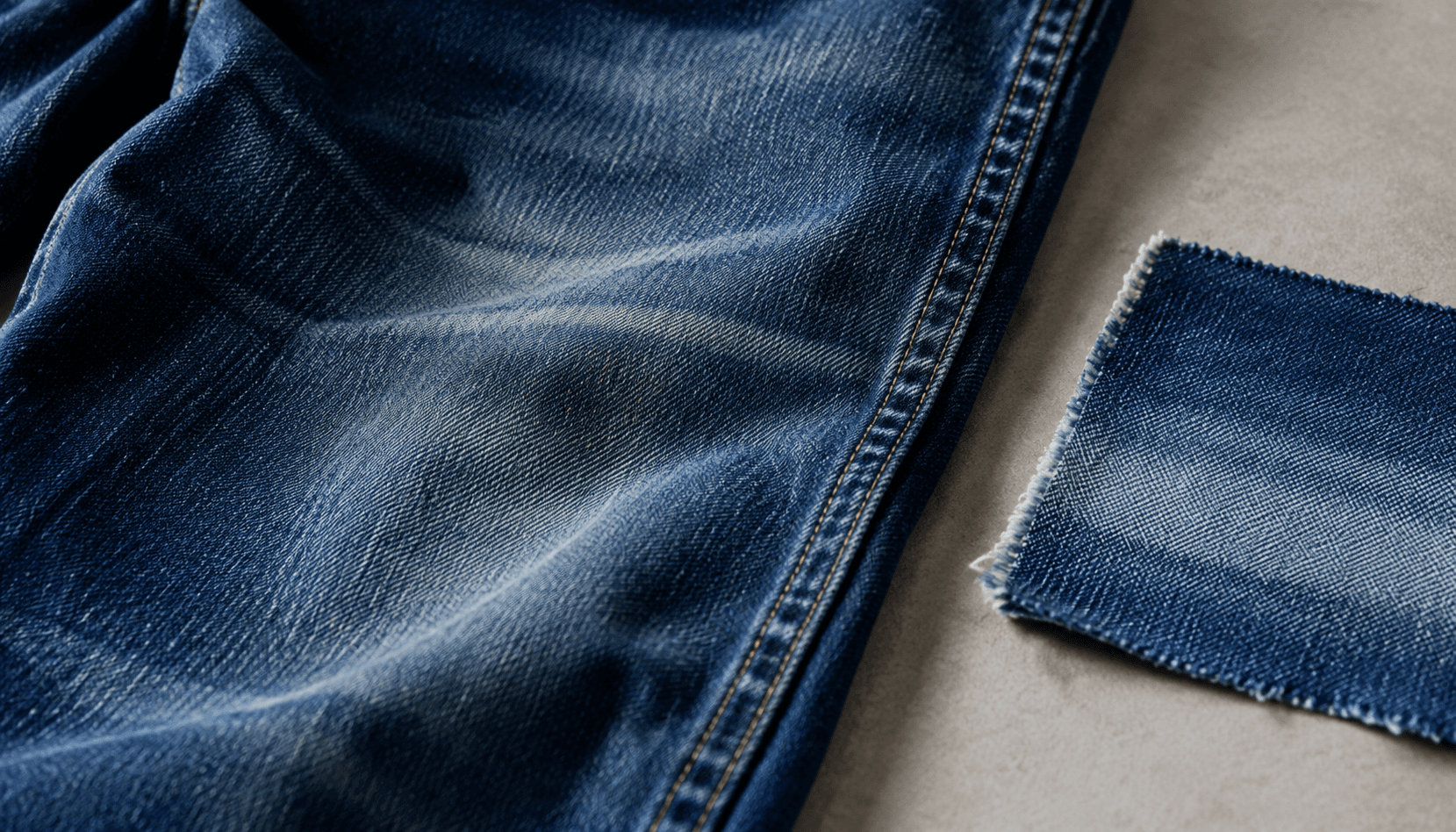
Reference images can indicate direction, but they cannot be used directly as the acceptance standard for denim wash colors. Confirming wash color ultimately comes down to a wash sample garment signed by both parties, with the fabric, pre-wash and post-wash states, and viewing conditions recorded at the same time.
What reference images can and cannot convey
Target color samples, reference garments, or clear images provided by the customer can be used to communicate treatment directions such as light or dark shades, whiskering, grinding/fading, distressing, and frayed edges. However, images are affected by shooting lighting and screen display, and the same image may appear different in color on different devices. They cannot serve as an absolute color difference standard, nor can fabric composition or process parameters be judged from an image alone.
If only images are available without physical samples, first mark the images as reference direction and do not treat them as a confirmed final color.
Why the same wash effect varies by fabric
Different fabrics and structures can produce different hand feel and color from the same treatment. After changing fabric, wash color, hand feel, and garment dimensions may all change, requiring re-verification of the sample garment; it cannot be directly regarded as an equivalent substitute.
Therefore, when confirming wash color, fabric information should be fixed alongside it: composition, weight, and weave should be based on confirmed product specifications or fabric documentation, not inferred from photos. After a fabric change, the original wash sample garment no longer represents the color result of the new fabric.
What to record at the sample garment stage
After receiving the wash sample garment, it is recommended to record the color and effect agreed by both parties based on the actual sample piece, and to confirm the viewing and comparison conditions. Specifically, record:
- Fabric number or specification version;
- Wash process name or treatment method;
- Whether the sample garment is in pre-wash or post-wash state;
- Color depth and treatment details at key areas, with photo annotations indicating locations;
- Light source conditions during comparison, to avoid disagreements under different lighting.
Distinguish between required modifications and acceptable differences. Keep version numbers and confirmation records for each round of modification; when materials or structures change, re-check costs and timing at the same time.
What governs bulk production
Sample garment approval means both parties have determined the production reference. Bulk production uses the specification version confirmed by both parties, and wash color should also be checked against the approved wash sample garment. When deviations are found, record the style number, quantity, photos, and measurement results, and confirm the handling plan with the business contact.
When testing or special standards are required, specify the requirements and verification methods at the development stage. Do not promise zero color difference or unverified eco-friendly processes without documentation.
Different confirmation paths for custom and available styles
For available styles, first check the specifications and stock shown on the current detail page and ordering window; for custom development, start from a reference style and discuss fit, fabric, wash, and branding details. Confirmation materials from the two paths cannot be mixed. Custom development reference styles show design direction and do not represent existing stock ready for shipment.
If the project requires adjustments to wash or branding details, the scope of discussion can be understood from the denim custom development and private label services page; actual footage of the factory wash process can be viewed on the denim manufacturing process page for corresponding scenario descriptions.
Next steps
To confirm denim wash color, the core action is to prepare a target color sample or reference garment, record the fabric, wash process, pre-wash and post-wash states, and viewing conditions together at the sample garment stage, then sign for confirmation. When only images are available, proceed based on reference direction first and do not write it into an acceptance commitment prematurely.