
Color Difference Confirmation in Custom Denim Apparel Development: What to Add First to Your Overseas Brand Supplier Communication Checklist
A sourcing communication note for brand owners and buyers. It focuses on an underrated step in custom denim apparel development—wash color and color difference confirmation—explaining the differences between photos, color swatches, and sample garments as references, and the observation conditions that should be specified in advance in an overseas denim supplier communication checklist. It is intended for teams that need to confirm wash effects across regions without locking a project into a zero-color-difference standard.
Wash color differences cannot be standardized by photos alone. Target color swatches or reference garments should be sent, key areas and acceptable ranges should be recorded on the sample garment, and then written into the confirmed specifications.
In this article
What an image can and cannot conveyColor swatches, reference garments, and sample garments: the strength of three referencesObservation conditions that should be specified in advance in the communication checklistTime items easily overlooked in overseas communicationA verifiable closing action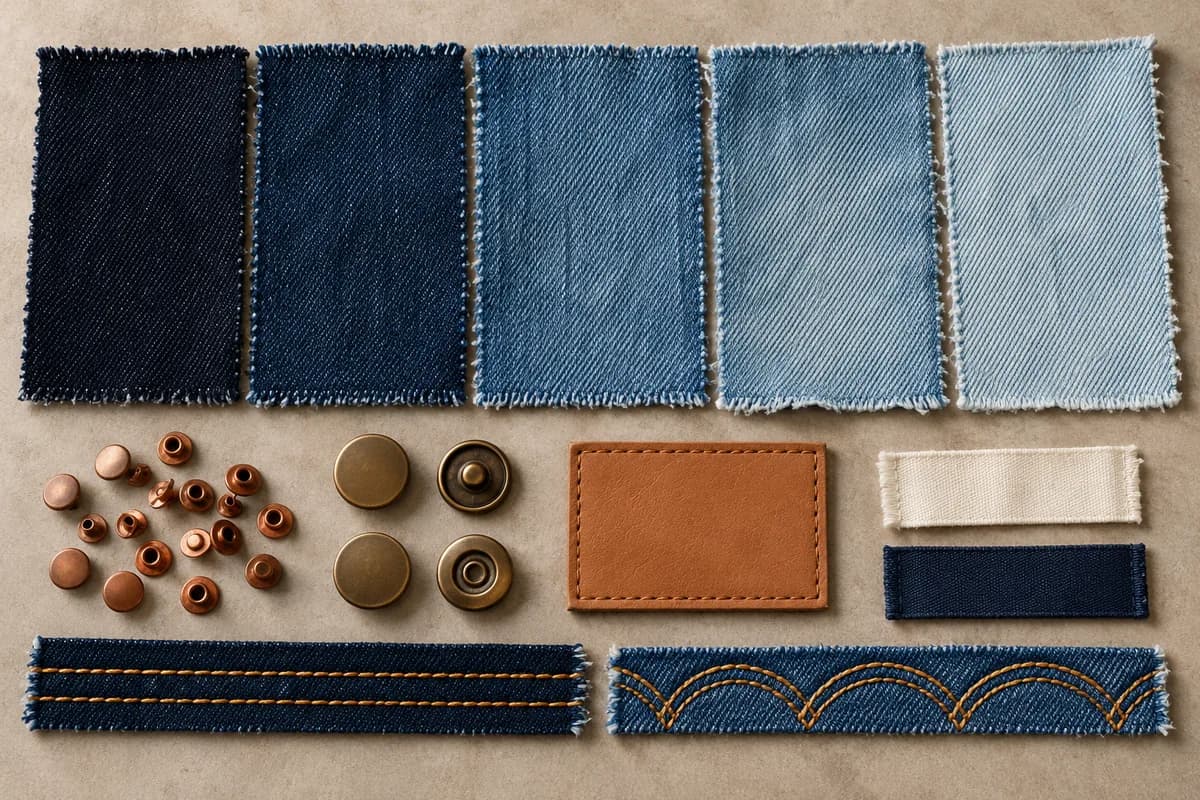
Wash color is one of the items most easily oversimplified during communication in the custom denim OEM process. The buyer sends a reference image and says, "This color." The supplier replies, "We can do it." Both sides assume it has been confirmed. Only when the sample garment arrives do they discover that the reference image was shot under studio white light, while the sample was viewed under natural light, and the two sides' judgments of depth were never based on the same conditions.
What an image can and cannot convey
Reference images are suitable for expressing direction: lighter or darker, blue-toned or gray-toned, whether there is obvious fading and whiskering. They are not suitable as a color difference standard. The reason is not image quality, but that the wash effect itself is influenced by fabric, construction, lighting, and screen together. The same image may appear different on a phone and a monitor; the same treatment applied to fabric of different fiber content or weave may also produce different hand feel and color.
If a particular area's color is a design priority, provide a separate clear close-up reference and specify which areas must be preserved and which can vary. Details that cannot be identified from an image should not be assumed as confirmed during communication.
Color swatches, reference garments, and sample garments: the strength of three references
Ranked by verifiability, sending a physical color swatch or reference garment is stronger than an image, and sample garment approval is stronger than a color swatch. A color swatch conveys true color and hand feel, but it carries no fit information; the same swatch applied to different pant silhouettes may not present identically due to differences in seam direction and stress points during washing.
A sample garment is the only reference that allows color, placement, and garment construction to be viewed together. When approving a sample, compare depth, whiskering, fading, holes, or frayed edges point by point, and record the details that need to be preserved. Here it is important to distinguish between "must change" and "acceptable" differences, avoiding treating every minor variation as a defect.
Observation conditions that should be specified in advance in the communication checklist
In the communication checklist for an overseas brand's denim supplier, color difference related items should at minimum cover: whether the target color swatch or reference garment has been sent, the lighting conditions during observation, the areas to be confirmed, the acceptable color variation range, and whether re-confirmation is required after any change to fabric or wash formula.
Fabric substitution will affect color and wash performance. After a change, the sample garment should be re-checked and cannot be directly treated as an equivalent replacement. If testing or special standards are required, they should be raised during the development stage with a clear verification method, rather than added at the bulk production stage.
Time items easily overlooked in overseas communication
Confirming color differences across regions involves time for sample shipping itself. Scheduling the rounds of sending samples, feedback, and re-confirmation into the development plan is more practical than compressing the time for a single review round. Keep version numbers and confirmation records for each round of modification, and sync the latest version after changes to avoid inconsistency among drawings, sample garments, and orders.
Sample garment approval means both sides have established the production reference. It does not mean that details the customer has not confirmed can be decided by the factory on its own. Sample fees, number of modifications, and shipping arrangements are subject to project agreements.
A verifiable closing action
The next time you receive a wash reference image, first ask: Under what lighting was this image taken, and can a physical color swatch of the key areas be sent? Record the answers in the requirement specification before proceeding to sampling. The development path can be distinguished by comparing the two entry points of stock purchasing and custom development: for stock, check the current ordering window for stock denim purchasing; if silhouette, fabric, or wash changes are needed, go through custom denim development and OEM services. Corresponding materials for the production stage can be found in the denim production and manufacturing process.