Choosing a custom jeans factory: clarify these four things before discussing pricing
When evaluating factories for custom denim jacket development, don't start with factory size or sample photos. This article is for brands and buyers screening suppliers, explaining four conditions to verify before requesting a quote: whether the style information is sufficient to support sampling, whether size and fit specifications are aligned, how to re-sample after fabric and wash changes, and how confirmation milestones are written into the order. Each item includes actionable verification methods and boundaries for handling insufficient information.
To determine whether a custom denim manufacturer is a good match, first confirm whether it can produce samples according to your size chart, fabric, and wash requirements—rather than comparing quotes first.
In this article
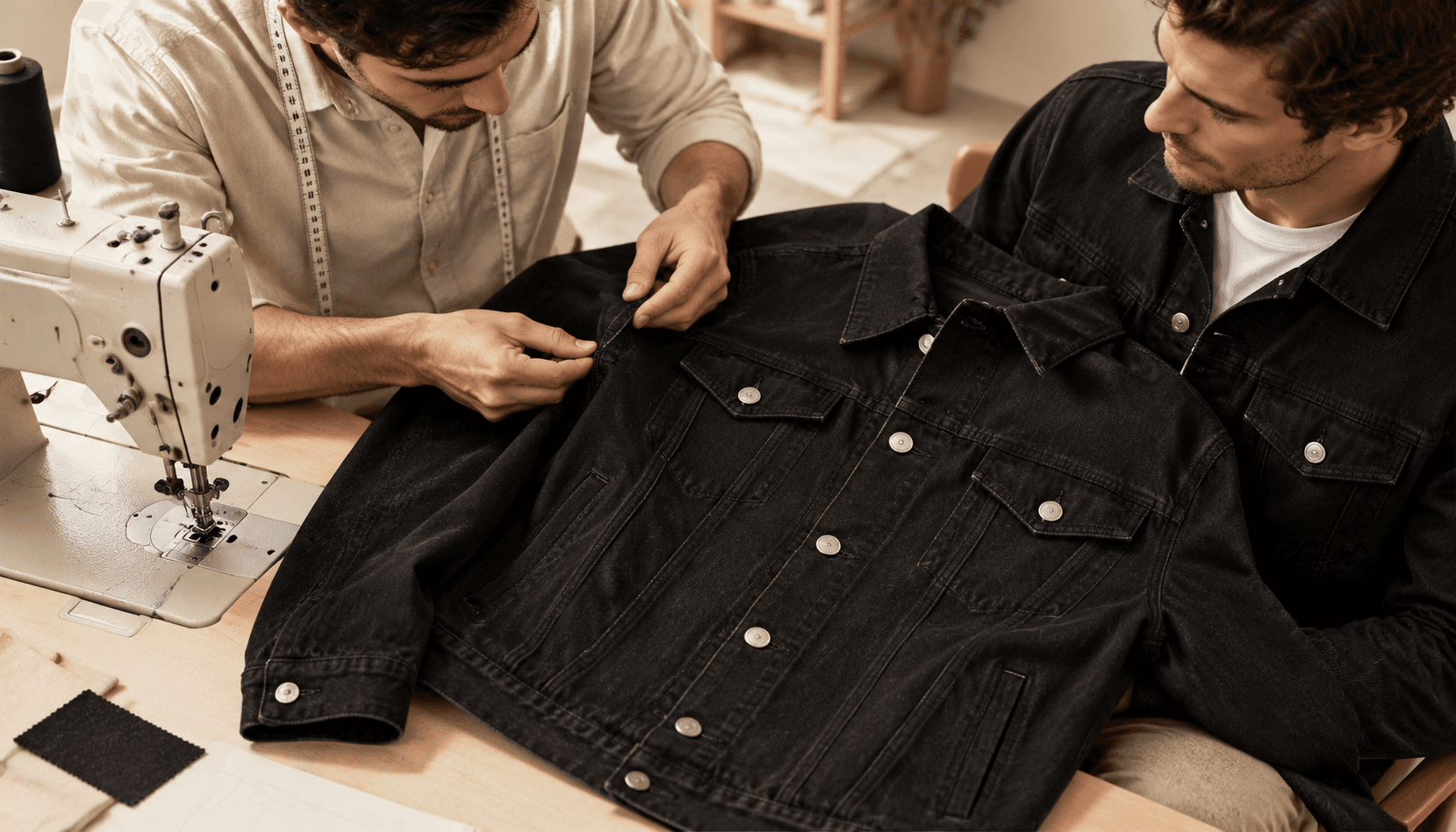
When asking "how to choose a denim customization factory," most suppliers start by sending factory photos and sample garment images. These materials can show that the other party works in the denim category, but they cannot answer a more practical question: can this style you have on hand be made into a sample garment that can be confirmed according to your sizes and craftsmanship? This is especially true for custom denim jacket development—once structures such as flap chest pockets, metal buttons, and cuff tabs are fixed, pattern allowances and sewing sequence will change accordingly, and factory selection should be based on these specific conditions.
First, see whether it can handle your materials
Custom communication usually follows two paths: OEM takes your existing design drawings, tech packs, or reference samples; ODM starts from the factory's existing reference styles and discusses adjustments to fit, fabric, wash, and brand details. Neither path means all designs can be directly produced.
Take the men's black denim jacket with flap chest pockets as an example. The product page shows a design rendering, not an existing sample garment or an actual photo of stock. This determines that it can only serve as a starting point for development discussions and cannot be treated as "existing bulk production" when discussing lead times. When asking a factory for a quote, you should also provide shoulder width, chest circumference, garment length, sleeve length, and the thickness of inner layers, because the movement allowance of a layering fit needs to be checked on the sample garment using these data, not judged from images.
If the other party quotes a definite price and lead time before you provide the above information, that quote has limited reference value—it likely does not cover the craftsmanship you actually need.
Size chart standards must be aligned
S, M, and L in different markets cannot be directly regarded as the same sizes. When selecting a factory, confirm which size chart they use for sampling, what the measuring method is, whether the unit is centimeters or inches, and whether measurements are taken before or after washing. For denim jackets, also confirm the starting points for measuring sleeve length and chest circumference; otherwise, after the sample is returned, you may find that the two sides did not measure the same position.
This step can rely on existing verification methods, such as how to check jeans size charts and tolerances. The approach to measurement definitions and allowable tolerances also applies to jacket-type tops. The key is not how detailed a chart is, but that both sides understand the same number in the same way.
If fabric or wash changes, the sample must be redone
The development difficulty of black denim jackets is often underestimated: color depth, hand feel after washing, fabric weight, and shrinkage all affect garment dimensions and the flatness of flap pockets. Fabric substitution may change color, wash effect, and fit performance. After a change, the sample should be rechecked and should not be assumed to be an equivalent replacement.
Images and reference color swatches are affected by lighting and screens and cannot be used as absolute color difference standards. Whether the factory is willing to re-sample after a wash change says more about the collaboration approach than how many renderings it shows. When testing or special standards are required, they should be raised during the development stage and the verification method confirmed, rather than added after bulk production is completed.
Write confirmation milestones into the order
Custom development generally goes through several stages: communicating requirements, confirming the proposal, sample review, approving the sample and production, and quality inspection, packaging, and shipment. Each stage should have a clear confirmation result. Sample approval means both sides have determined the production reference, but it does not mean the factory can decide on its own details you have not confirmed.
Lead time standards should also be clarified: sampling, bulk production, and shipment of available styles are three different arrangements, and all need to be confirmed against the specific order. Shipment does not equal arrival; transportation and customs clearance time are calculated separately. Writing these milestones into the order is more reliable than remembering them verbally.
The boundary of factory selection judgment is this: what you can verify is only how the other party responds to your materials. The more specific the response—pointing out which data is missing, explaining which process needs to be tried first—the more worth entering sampling; for those that only give general promises, complete the materials first before discussing further.