
Denim Garment Quality Acceptance Checklist and Budget Control: First Distinguish Stock vs. Custom
A sourcing guide for brands, wholesalers, and buyers. Starting from the differences between the stock and custom paths, this article explains how the verification basis of the denim garment quality acceptance checklist changes with each path, and how to control budgets in denim line development: first lock down the style conditions that affect pricing, then release costs step by step according to confirmation milestones. Suitable for sourcing staff who are comparing stock replenishment with custom development and need to align acceptance items with budget items.
Checklist verification items should match the sourcing path: for stock, verify orders against physical goods; for custom, verify approved samples against specification versions. Budget differences mainly come from fabric, wash, trims, and quantity conditions.
In this article
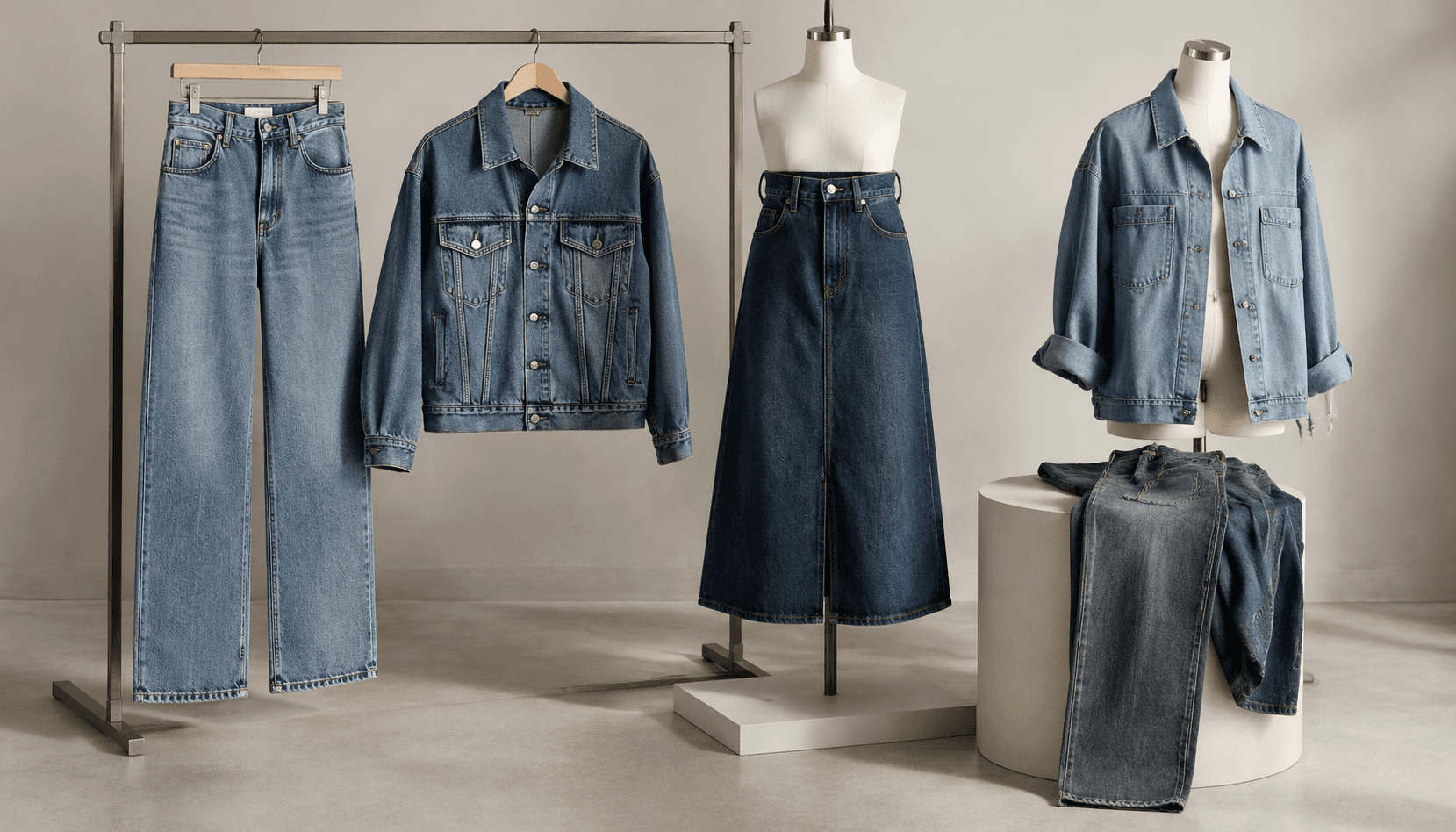
The same acceptance checklist, when applied to available styles and custom development, is not checked against the same reference. Acceptance of available styles should be checked against the current order and the goods actually received; acceptance of custom development should be checked against the approved sample garment and the specification version confirmed by both parties. Mixing the two easily leads to repeated issues such as "it doesn't look like the picture."
Available styles vs. custom development: different acceptance references
Purchasing available styles starts from the "Start Ordering" button on the product card; after entering sizes and quantities, verify the order and settlement information. Sizes, availability, minimum order quantities, and prices are subject to the current ordering window and business confirmation; the knowledge base does not store fixed inventory figures. During acceptance, first check whether the style number, sizes, and quantities in the order match what was actually received, then check appearance and stitching.
Custom development follows a different path: starting from a reference style, confirm fabric, wash, trims, and brand labels, then make samples, review them, approve the sample garment, and only then arrange bulk production. Acceptance is based on the approved sample garment and confirmed specifications, not the reference image. Approving a sample means both parties have settled on the production reference; it does not mean unconfirmed details can be decided by the factory on its own.
The acceptance checklist should first state "what to check against"
A quality acceptance checklist for denim garments should at minimum include: garment measurements, appearance, color variation, stitching, trims, and packaging. Each item must state its reference basis—whether the order page, the approved sample garment, or a specification sheet signed by both parties.
Measurement checks should specify the measuring method, units, pre-wash or post-wash state, and allowed tolerances. S, M, and L in different markets cannot be treated as the same size. Color variation checks should state the viewing conditions: reference images are affected by lighting and screens and cannot serve as an absolute color standard; the confirmed sample garment effect should be used instead. When deviations are found, record the style number, quantity, photos, and measurement results, then confirm the handling plan with the business contact.
If a sampling inspection plan, third-party inspection, or test reports are required, these should be raised in advance and the arrangements, costs, and responsibilities confirmed; do not promise a specific AQL level or pass rate without supporting documentation.
Budget control: lock down the conditions that affect pricing first
How to control budget in denim collection development—the key is not squeezing unit prices, but reducing rework and changes. Pricing is determined jointly by style, quantity, fabric, wash, trims, branding customization, packaging, and delivery requirements. When comparing quotes, customers should confirm whether sample fees, trims, packaging, shipping, taxes, and other services are included; unless confirmed in a quotation, do not assume free shipping, tax-inclusive pricing, or free sampling.
Minimum order rules should be checked style by style: some custom development reference styles indicate a minimum of 30 pieces per style, while other custom styles still need to be confirmed per the proposal; available styles are subject to the current detail page and ordering window, and some items support a minimum of 1 piece with mixed sizes in the same style. Whether minimum order rules are calculated by style, color, or size directly affects quantity planning.
Fabric substitution may affect color, wash, hand feel, and garment measurements; after a change, the sample garment should be re-checked and not automatically treated as an equivalent replacement. Insufficient confirmation of wash effects often makes later modifications more time-consuming than early sampling.
Release costs in stages using confirmation milestones
Custom development can be divided into five stages: communicating requirements, confirming the proposal, sampling and review, approving the sample garment and production, and quality inspection, packaging, and shipping. Each stage should have a clear confirmation result, and the latest version should be synchronized after modifications. For sample review, it is recommended to consolidate feedback in one round covering fit, measurements, fabric hand feel, color and wash, stitching, trims, and label placement; mark areas on photos and state the target effect, distinguishing must-change items from acceptable differences.
The budget significance of this approach: tie cost release to confirmation milestones, avoiding repeated sampling before the proposal is settled and avoiding discovering specification version mismatches only at the bulk production stage. Sample fees, revision limits, and shipping arrangements are subject to the project agreement.
Budget control for the available styles path is more direct: first verify sizes, quantities, and prices in the current ordering window; if sizes are missing or quantities exceed available ranges, contact the business contact to confirm supply or move to custom development discussions. Payment methods, discounts, and payment terms are subject to actual settlement and order agreements.
Acceptance and budgeting on both paths come down to the same thing: clearly stating "what to check against." Available styles are checked against the order and the actual goods; custom development is checked against the approved sample garment and confirmed specifications; quotes are confirmed item by item against the quotation. As a next step, list the measurement points and workmanship items that must be checked for this style, then confirm whether the reference documents for these items are complete.