
The Difference Between Stock Denim Sourcing and Custom Development: Know Which Path You're On Before Ordering
Sourcing guidance for brands, wholesalers, and buyers. Stock sourcing and custom development are two different ordering paths: stock is subject to the sizes, quantities, and ordering windows currently shown on the product page; custom starts from a reference style and requires confirming fabric, wash, branding labels, and quantity before moving into sampling and quoting. Some custom development references are listed at 30 pieces per style, but this should not be treated as a blanket commitment across all styles, fabrics, or colors. To determine your path, ask yourself first: are you buying existing styles, or do you need to change the fit, fabric, or branding to your own requirements?
Stock orders go through the product page ordering window, where you check current sizes and quantities before checkout; custom orders require confirming the reference style, fabric, wash, trims, and quantity first, with pricing and scheduling verified per project. The two cannot share the same pricing or lead time terms. Field order: title, summary, metaTitle, metaDescription, tldr; SEO fields must be independently condensed.
In this article
In-Stock Path: Current Information in the Ordering Window PrevailsCustom Path: Confirm the Plan First, Then Discuss Price and SchedulingLead Times Have Different Definitions—and Different Starting PointsThree Questions to Determine Which Path You Need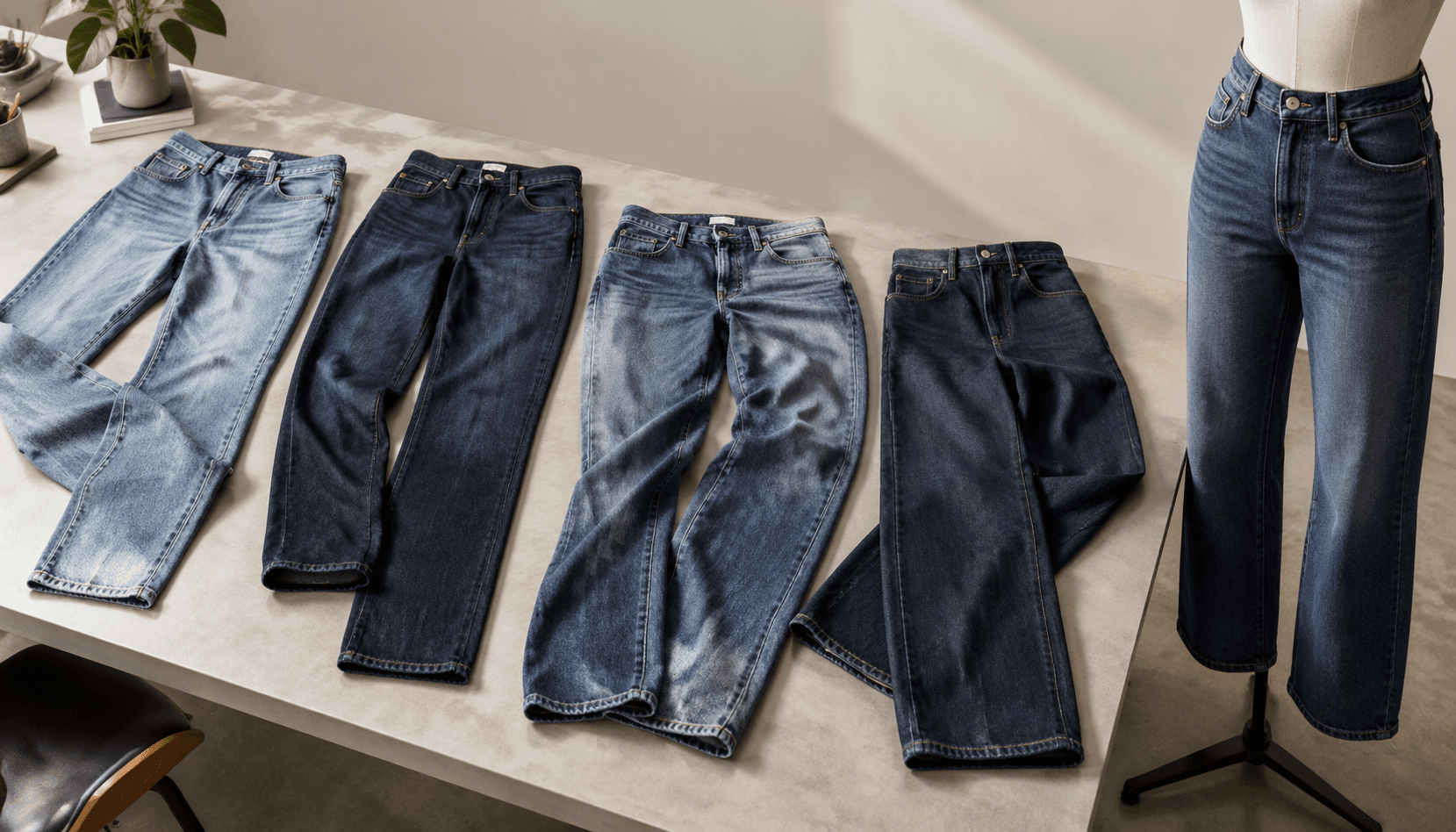
The difference between ordering the same pair of jeans through the in-stock entry point and developing them through the custom entry point isn't the price of a garment—it's the order of confirmation. For in-stock sourcing, you verify the current sizes, quantities, and ordering window shown on the product page. For custom development, you verify the reference style, fabric, wash, trims, brand labels, and quantity. Mixing the two is the most common source of problems: applying in-stock pricing to custom work, or treating a custom development reference as existing inventory.
In-Stock Path: Current Information in the Ordering Window Prevails
In-stock denim sourcing starts from the "Start Order" button on the product card or the ordering entry on the detail page. You fill in the sizes and quantities you need, then review the order and checkout information. Sizes, availability, minimum order quantities, and pricing are subject to the current ordering window and business confirmation. The knowledge base does not store fixed inventory numbers or long-term valid pricing. Some items support a 1-piece minimum and mixed sizes within the same style, but this is a rule for specific products—not a universal condition for all in-stock styles.
Three situations push a request from in-stock to custom: sizes are missing, the quantity exceeds what's available, or you want to change the design. Contacting the business team to confirm supply before deciding whether to move into custom discussions saves a round compared to placing an order first and modifying later.
Custom Path: Confirm the Plan First, Then Discuss Price and Scheduling
Custom development starts from a reference style, or from the customer's own design drawings, tech pack, or reference sample. OEM discussions can proceed based on materials the customer already has; ODM discussions can start from website reference styles and cover adjustments to fit, fabric, wash, and brand details. Once reference materials are received, development feasibility, materials, craftsmanship, pricing, and scheduling must be verified before moving to sample garments.
Here's a number that's often misread: some website custom development reference styles are marked with a 30-piece-per-style minimum. This applies only to the reference styles carrying that label. Minimum order quantities for other custom styles still need to be confirmed per plan—30 pieces cannot be treated as a blanket commitment across all styles, fabrics, or colors. Minimum order rules also need to be checked: whether they're calculated per style, per color, or per size, and quantities for different styles are not combined by default.
Custom items are quoted based on requirements and do not carry over in-stock pricing. Quotes factor in style, quantity, fabric, wash, trims, brand customization, packaging, and delivery requirements. When comparing quotes, confirm whether sample fees, trims, packaging, shipping, taxes, and other services are included. Without confirmation on a quotation, free shipping, tax coverage, or free sampling should not be assumed.
Lead Times Have Different Definitions—and Different Starting Points
The project lead's stated capacity figure is 300,000 pieces, which in prior communications referred to monthly capacity. Before formally using a monthly figure with customers, the business team should reconfirm the statistical scope and current available scheduling. The lead stated sampling takes 3 days, bulk production ships within 30 days depending on volume, and in-stock items ship same day. These are capabilities and arrangements that must be confirmed against specific orders—they cannot be guaranteed to apply unconditionally to all styles.
The starting point matters even more. The 3-day sampling clock begins after materials, documentation, and craftsmanship are verified. The 30-day bulk window begins after sample approval, specifications, and order terms are confirmed. Same-day shipping for in-stock items begins after actual inventory and dispatch conditions are verified. Which confirmation milestone triggers the lead time still needs to be written into the order. Shipping also doesn't equal arrival—international transit and customs clearance times must be calculated separately.
Three Questions to Determine Which Path You Need
First, are you sourcing an existing style, or developing to your own brand requirements? The former goes through the in-stock sourcing pages, verifying sizes, quantities, availability, and shipping arrangements style by style. The latter enters custom denim development and private label services, where fit, fabric, wash, and brand details are discussed.
Second, where do the changes land? Changing only quantity or size mix may still fall within the in-stock range. Once fit, fabric, wash, trims, or brand labels are involved, it becomes a custom discussion requiring fresh verification of samples and pricing.
Third, how much material do you have on hand? For a first inquiry, we recommend providing: reference style numbers or product links, target market, estimated quantity per style, color and size breakdown, fabric or hand-feel requirements, wash effects, brand label and packaging requirements, target lead time, and destination country. If your materials are incomplete, you can start with reference images and note the details you most want to keep or adjust.
Keep in mind that custom items display reference designs—they do not represent stocked inventory. In-stock pages should not mix in custom items either. Style images only show appearance; they cannot be used to infer composition, weight, shrinkage, or deliverable quantity. Fabric composition, weight, stretch, and similar parameters should come from confirmed product specifications, fabric documentation, or sample records.
If your thinking is still at "let me see if there's something close enough," you're better off going through the in-stock entry and checking style by style. If you can already write down what must be kept and what can be adjusted, then move into custom plan confirmation—your odds of rework will be lower.