
Denim Size Charts and Tolerances: First Distinguish Pre-Wash vs. Post-Wash When Checking
This article is intended for brands and wholesalers, outlining the key steps when checking denim size charts and tolerances: first confirm the measurement state (pre-wash/post-wash), units, and measurement method, then compare each point—waist, hip, front rise, back rise, inseam, thigh, and leg opening—one by one. Tolerance ranges must be specified in the confirmed specs and cannot be inferred from sample garments.
When checking denim size charts and tolerances, first confirm whether the measurement state is pre-wash or post-wash, then compare key measurement points one by one; tolerance ranges must be stated in the confirmed specs.
In this article
Confirm the measurement state before discussing tolerancesCheck key areas one by one, not just the total lengthAfter sample approval, lock the size versionCustom and available styles have different checking priorities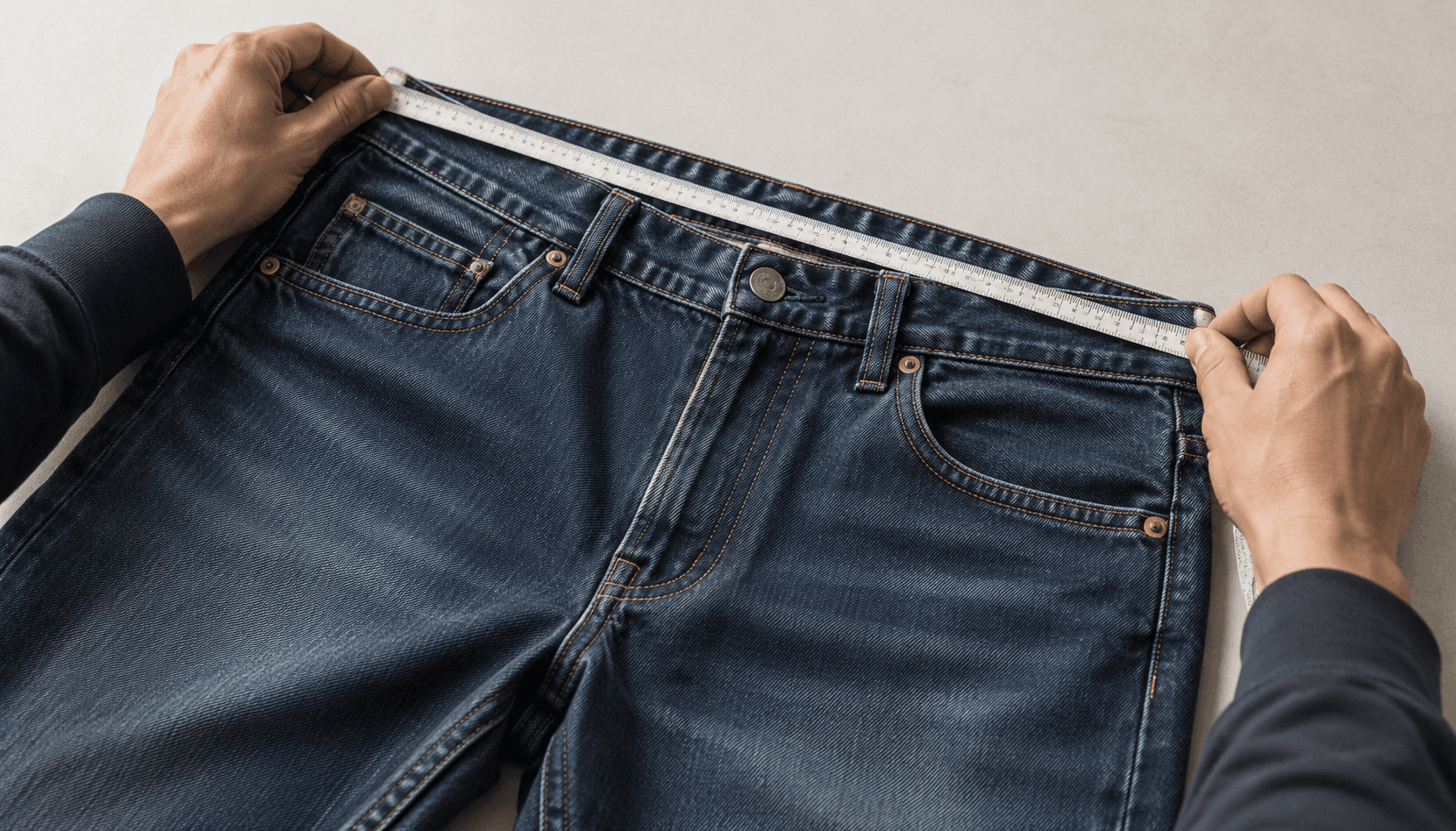
When checking a denim size chart and tolerances, the first step is not to look at how much the numbers differ, but to confirm whether the size chart measures before wash or after wash. For the same batch of jeans, waist and inseam may change before and after washing. If pre-wash data is compared with post-wash samples, the difference may be mistaken for a workmanship issue.
Confirm the measurement state before discussing tolerances
The size chart should specify the measurement method, unit, pre-wash or post-wash state, and allowed tolerance. If any one of these is missing, the check lacks a baseline. For example, waist may be measured flat along the top edge of the waistband or along the curve, and inseam may be measured from the waistband to the hem or from the crotch seam to the hem; different methods produce different results. In custom communication, these should be written into the specification before sampling, not asked later after the samples come out.
The tolerance range should also be written into the confirmed specification. If a tolerance is not specified, it cannot be assumed to follow some industry convention by default. If a sampling inspection plan or measurement method needs to be specified, it should be raised during the development stage, and the arrangement and responsibilities should be confirmed.
Check key areas one by one, not just the total length
Size checking for denim usually involves waist, hip, front rise, back rise, inseam, thigh, and leg opening. Checking only inseam can easily miss deviations in rise or thigh. It is recommended to use a list by area, recording the measured value, size chart value, and difference for each area, and noting the measurement state. When wholesalers check bulk orders, they can refer to the easily missed items mentioned in Denim Size Charts and Tolerances: Which Items Wholesalers Easily Overlook During Checking.
S, M, and L labels in different markets cannot be directly treated as the same size. Customers need to provide a size chart or key area dimensions for the target market, and check the measurement method, unit, pre-wash or post-wash state, and allowed tolerance during sampling.
After sample approval, lock the size version
During sample review, it is recommended to collect feedback at one time on fit, dimensions, fabric hand feel, color wash, stitching, trims, and label position, mark areas in photos, and state the target effect. Keep version numbers and confirmation records for each round of changes. Sample approval means both parties have determined the production reference; bulk production uses the specification version confirmed by both parties, and the wearing effect of all sizes cannot be inferred solely from the model's body shape.
If fabric substitution or structural changes are involved, sample dimensions should be rechecked and not directly treated as an equivalent replacement. Fabric substitution may affect color, wash, hand feel, and garment dimensions.
Custom and available styles have different checking priorities
For available styles purchasing, size, inventory, MOQ, and price are subject to the current ordering window and business confirmation results. For custom development, the size chart and tolerances need to be written into the specification at the sampling stage, and must-have modifications should be distinguished from acceptable differences. If a custom process is needed, first review Custom Denim Development and Private Label Services to understand the scope of communication, then prepare reference styles, estimated quantity, size ratio, and destination country, so as to form a requirement description that can be quoted.
Checking a size chart and tolerances is essentially confirming that both parties have the same record of "what is measured, how it is measured, and how much difference is allowed." When the information is incomplete, first add the measurement state and tolerance fields, then proceed to the next round of confirmation.