
What materials are needed for denim sampling: how to choose between a tech pack and reference samples
For brands and buyers preparing to develop denim styles, this explains the list of reference materials to submit at the sampling stage and compares what a tech pack and a physical reference sample can and cannot answer. If materials are incomplete, reference images can be sent first, but parameters such as composition, weight, and stretch must be based on confirmed specifications or sample records and cannot be inferred from images.
Before sampling, prepare reference styles, size charts, fabric and wash requirements, and brand trim artwork; a tech pack and reference samples are not an either-or choice—the more specific the materials, the less sample rework.
In this article
What tech packs and reference samples each answerFabric and wash: photos cannot replace parametersSize charts must specify measurement pointsBrand trims and packaging materialsQuantity, lead time, and receiving informationHow to proceed when materials are incomplete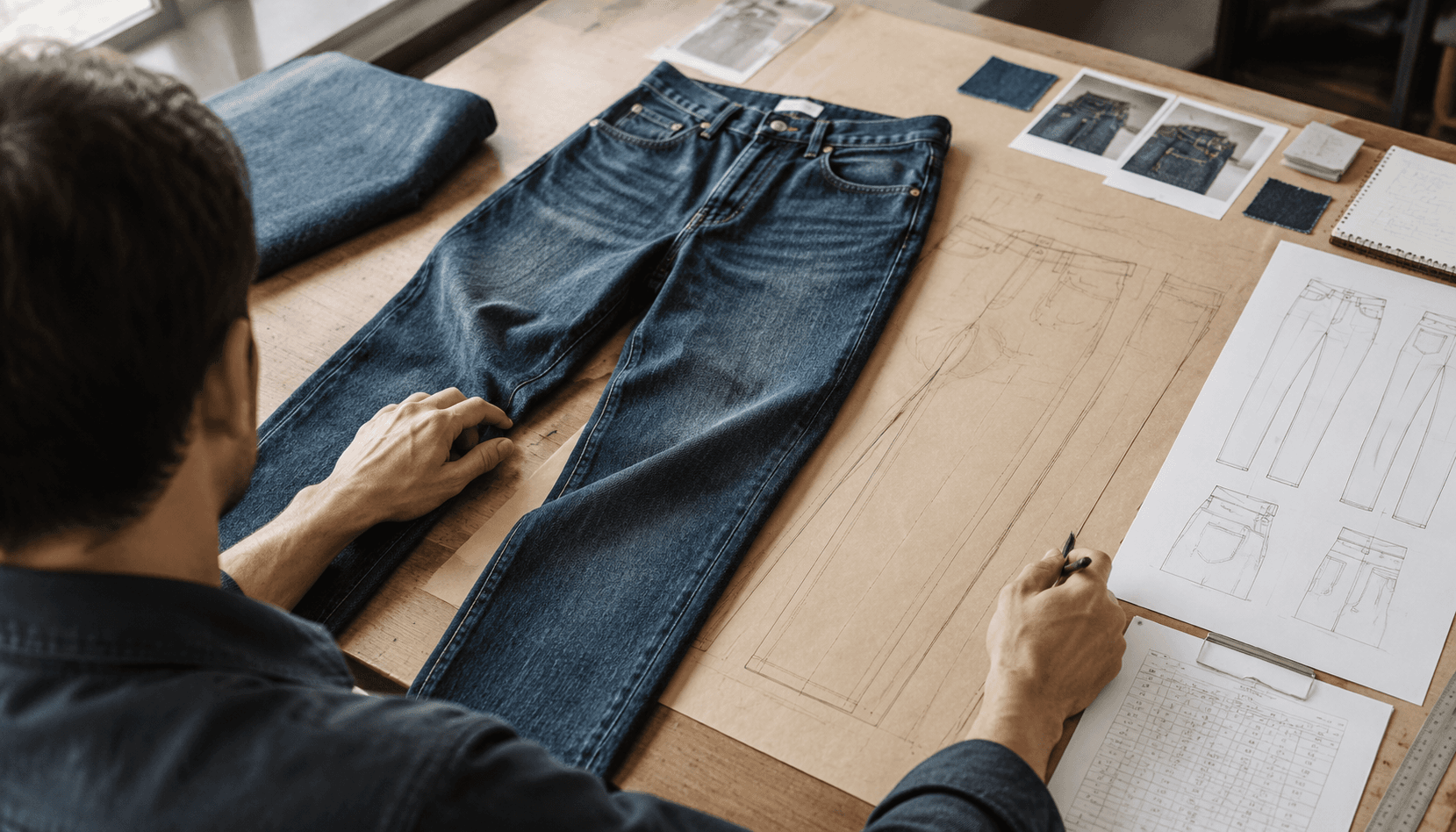
What materials are needed for denim sampling? The most direct answer is: a reference style or design sketch, a size chart for the target market, fabric and wash requirements, brand trim artwork, and quantity and lead time. These materials determine whether sampling can align fit, hand feel, and construction direction in one round. You can start with incomplete materials, but missing items will surface as rework points during sample review.
What tech packs and reference samples each answer
The two are not substitutes. Tech packs are good at conveying measurable information: key measurement points, measuring method, units, before-wash or after-wash state, and acceptable tolerances. Reference samples are good at conveying things that are hard to put into numbers: where the waistband sits when worn, how stiff the leg is, and the light-or-dark tendency of the wash color.
With only a tech pack and no physical sample, the factory's understanding of "slight flare" or "wide leg" may differ from the client's; with only a reference sample and no size chart, the factory can only work backward from sample measurements, and grading lacks a basis. A safer approach is to provide both and state which details must be kept and which can be adjusted.
Fabric and wash: photos cannot replace parameters
Fabric communication starts with use and hand feel, such as season, thickness, and whether stretch is needed. Accurate parameters such as composition, weight, and yarn structure should come from confirmed product specifications, fabric documentation, or sample records, not from judging photos. For styles that need stretch, confirm stretch, recovery, and garment fit requirements at the same time.
The same applies to wash. Clients can provide target color samples, reference garments, or clear images, and explain requirements for light or dark shades, whiskering, grinding, distressing, fraying, and other treatments. However, reference images are affected by lighting and screens and cannot serve as an absolute color-difference standard; different fabrics and constructions will also present different hand feel and color under the same treatment. These effects should be confirmed through samples, with key areas recorded.
Size charts must specify measurement points
Provide a size chart for the target market covering at least waist, hip, front and back rise, inseam, thigh, and leg opening; tops and skirts should be completed according to their specific construction. S, M, and L in different markets cannot be treated as directly equivalent sizes. During sampling, verify measuring method, size units, before-wash or after-wash state, and acceptable tolerances.
Bulk production uses the specification version confirmed by both parties; the fit of all sizes cannot be inferred solely from a model's body shape. If the client does not yet have a complete size chart, reference dimensions for the target market and try-on feedback can be provided first and gradually completed.
Brand trims and packaging materials
Main labels, care labels, leather patches, buttons, rivets, zippers, hangtags, and packaging can all be discussed, but the client should provide usable artwork, dimensions, colors, placement, and quantity requirements, and confirm authorization for pattern and trademark use. Label information and material claims are subject to confirmed materials; label content for different markets needs to be checked against specific requirements. Trims and packaging may have separate quantity, cost, and lead-time requirements, which should be confirmed item by item during quotation.
Quantity, lead time, and receiving information
For the first inquiry, it is recommended to provide the estimated quantity per style, color and size breakdown, target lead time, and destination country together. Quotation communication should take into account style, quantity, fabric, wash, trims, brand customization, packaging, and delivery requirements. Some custom development reference styles are marked with a minimum of 30 pieces per style; minimum order quantities for other custom styles still need to be confirmed by proposal, and 30 pieces cannot be treated as a uniform commitment for all styles, fabrics, or colors.
Sampling in 3 days, bulk delivery within 30 days depending on volume, and same-day shipment for available styles are capabilities and arrangements that need to be confirmed against the specific order and cannot be guaranteed as unconditionally applicable to all styles. The confirmation milestone from which lead time is counted must be written into the order.
How to proceed when materials are incomplete
You can start by sending reference images and explaining the details you most want to keep or adjust; customer service will first confirm whether it is an available style or a custom style, then follow up on missing items that affect quotation. Focus on two or three key questions at a time rather than holding clients back with a long questionnaire. To understand the scope of custom communication, see custom denim development and private label services; to first see existing style directions, browse the available denim sourcing page, but available styles and custom development reference styles are different sourcing paths, and custom styles must not be described as existing stock ready to ship.
During sample review, it is recommended to consolidate feedback on fit, dimensions, fabric hand feel, color and wash, stitching, trims, and label placement in one round, mark areas on photos and state the target effect, and distinguish must-change items from acceptable differences. Keep version numbers and confirmation records for each round of changes.
How complete the materials need to be depends on how much this style needs to change. The greater the changes, the more fabric, wash, and dimensions need to be written as checkable items rather than relying on a single image.