
Denim garment quality acceptance checklist: don't use sample photos as the basis for acceptance
When denim garments arrive, acceptance should be based on the mutually approved samples and written specifications, not on design drawings or product page photos. This article is for brands and buyers, explaining how to break down measurements, wash color variation, sewing, and trims into checkable items, and identifying which items require an agreed inspection plan and measurement method in advance to avoid disputes after delivery.
Acceptance is based on approved samples and confirmed specifications, checking measurements, color variation, sewing, and trims item by item; photos and reference images cannot replace physical confirmation.
In this article
First, distinguish "reference" from "confirmed item"Size verification: align on measurement method firstWash and color difference: check placement and conditionsStitching and trims: check item by item by areaAgree on the inspection plan in advanceA fillable acceptance checklist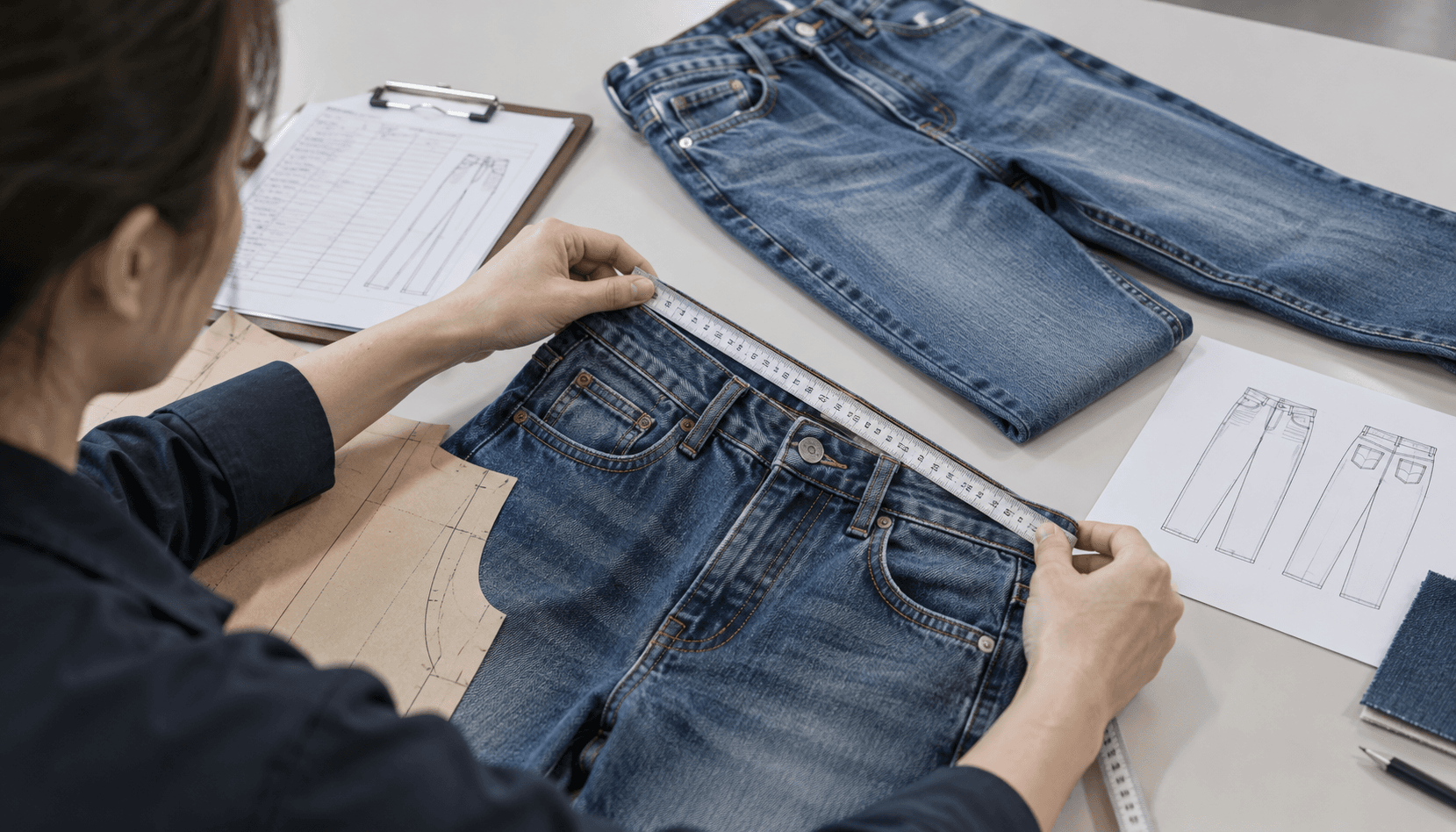
Treating model photos or design sketches on a product page as the acceptance basis is the most common mismatch in denim garment acceptance. Images can indicate style direction, but they cannot prove the waist measurements, wash placement, or stitch density of a given batch. Acceptance must come back to two things: the approved sample garment and the specification version confirmed by both parties.
First, distinguish "reference" from "confirmed item"
Reference images, factory photos, and design sketches at the custom communication stage serve different purposes. Reference images help align on style structure, and factory materials illustrate the corresponding production stage, but neither constitutes an acceptance commitment for a specific batch of garments. What can serve as the acceptance benchmark is the customer-approved sample garment and written specifications, including the size chart, wash placement description, confirmed trims samples, and packaging requirements.
If there are only images and no approved sample garment, acceptance lacks a common reference point, and any deviation easily becomes a subjective judgment.
Size verification: align on measurement method first
Size is the item most prone to disagreement in acceptance, and the cause is often not the garment but differing measurement methods. Before verification, confirm: the definition of measurement points (whether waist is measured on the inner or outer circumference, whether inseam is measured from the side seam or front center), the unit, pre-wash or post-wash state, and the allowed tolerance.
Measure item by item against the size chart provided for the target market, and record the difference between measured values and specification values. S, M, and L across different markets cannot be directly equated, nor can the fit on a model be used to infer all sizes. For custom orders, the confirmed specification version used for bulk production prevails; when sample garment measurements and final specifications differ, the order must state clearly which version prevails.
Wash and color difference: check placement and conditions
Wash acceptance requires looking at both overall color and the placement of local effects. Whiskering, fading, distressing, and frayed edges are placement-sensitive items; saying only "a bit lighter" cannot convey requirements for specific areas.
Reference images are affected by lighting and screens and cannot serve as an absolute color difference standard. Different fabrics and structures will show differences in hand feel and color under the same treatment. During acceptance, compare against the approved sample garment and record which parts are accepted and which still need adjustment. When testing or special standards are required, the requirements and verification methods should be specified at the development stage rather than judged after arrival.
Stitching and trims: check item by item by area
Stitching inspection can be broken down to specific areas: side seams, crotch seams, pocket corners, waistband, and leg openings. Check whether stitching is continuous, whether there are skipped or broken stitches, whether pocket bags lie flat, and whether zippers open and close smoothly. These are observational items and do not involve specific stitch density or strength values—unless the project provides test data, do not cite parameters to draw conclusions.
For trims, check whether the main label, care label, leather patch, buttons, rivets, zipper, hangtag, and packaging match the confirmed samples, and verify placement and quantity against confirmed materials. Label information and material declarations are based on confirmed materials; label content for different markets must be verified against specific requirements.
Agree on the inspection plan in advance
Before placing an order, the inspection requirements for garment size, appearance, color difference, stitching, trims, and packaging should be clearly defined. If the customer requires a specified inspection plan, third-party inspection, or test reports, this should be raised in advance, with arrangements, costs, and responsibilities confirmed. Without documentation, do not assume any AQL level or pass rate.
When deviations are found, record the style number, affected quantity, photos, and measurement results, verify against the order and approved sample garment, and then have the business team feedback a proposed resolution. Custom orders and available styles orders may be subject to different agreements; return and exchange conditions are governed by the actual terms.
A fillable acceptance checklist
| Check item | Basis | What to record |
|---|---|---|
| Size | Confirmed specification version and size chart | Measured values, measurement points, pre-wash/post-wash |
| Wash color and placement | Approved sample garment | Overall color, placement of local effects |
| Stitching | Confirmed sample garment | Area, phenomenon, affected quantity |
| Trims and labels | Confirmed trims samples | Placement, quantity, content |
| Packaging | Confirmed packaging requirements | Folding method, hangtag, bagging |
The end point of acceptance is not "looks about right," but that every item can be traced to an entry in the confirmed materials. If an item has no corresponding confirmed reference, confirm it first, then discuss whether it passes.