
Denim Size Charts and Tolerances: What Are the Key Differences in Verification Between Stock and Custom?
When sourcing denim, stock and custom orders follow different verification paths for size charts and tolerances. For stock, the size data and actual inventory available in the current order window are authoritative; for custom, you need to start from the target market's size chart, specify measurement points, units, pre-wash or post-wash state, and allowed tolerances, and use the approved sample garment as the basis for bulk production verification. This article compares the two paths in terms of size information, tolerance confirmation, and room for modification, helping buyers determine which information their current project should prioritize.
For stock, verify available sizes and current inventory; for custom, first confirm the size chart version, measurement method, and pre-wash or post-wash state. Tolerance ranges must be written into the confirmed specifications and cannot be inferred from sample garment photos. Field order: title, summary, metaTitle, metaDescription, tldr; SEO fields must be independently concise.
In this article
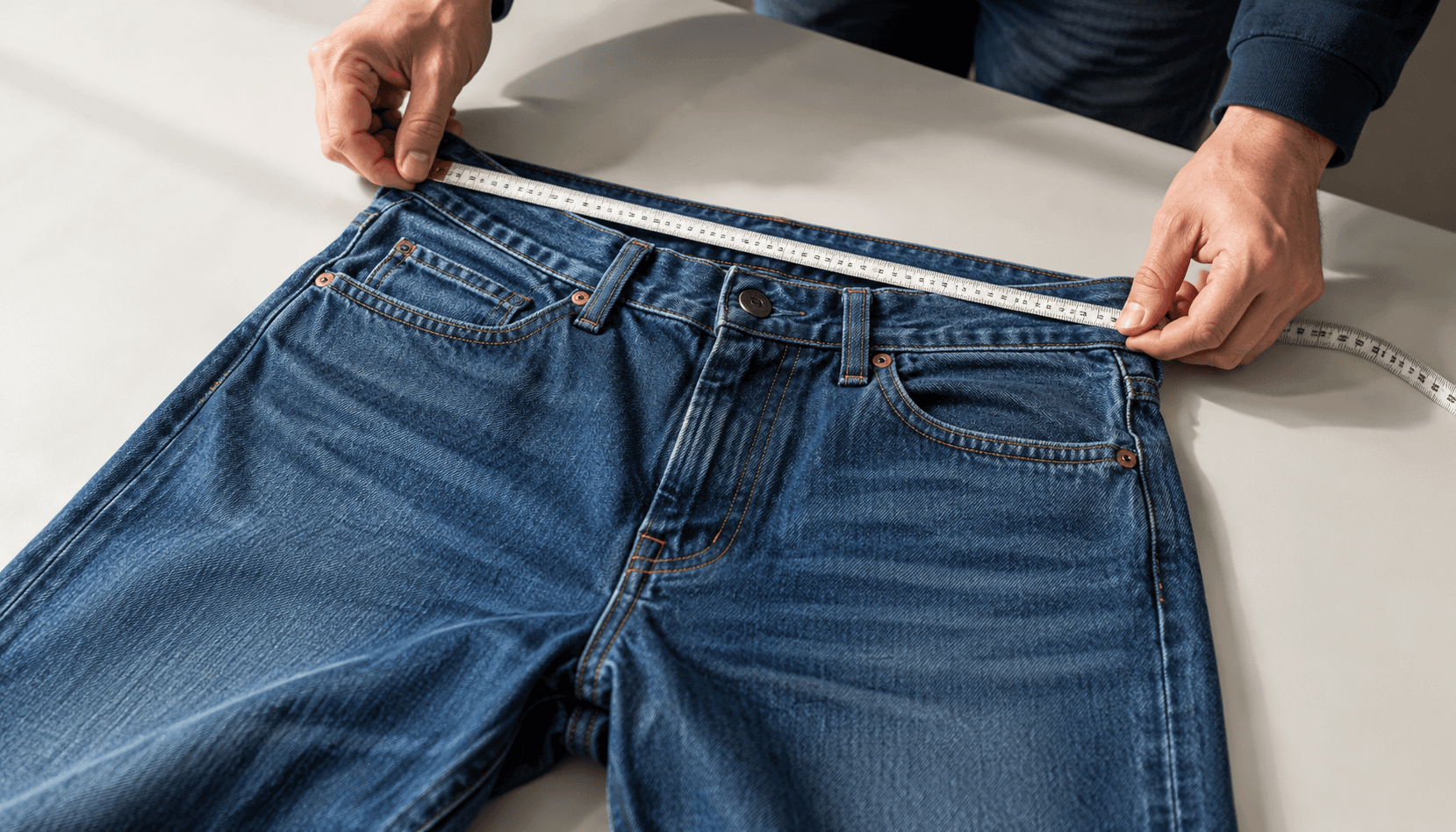
For the same pair of jeans, the size numbers on the available-styles page and the size chart discussed in custom development have different starting points for verification. For available styles, you check the currently listed sizes and available quantities; for custom development, you first confirm the version of the size chart you provide, the measuring method, and which confirmation document records the tolerances. Mixing the two can easily lead to treating "a size is shown on the page" as "we can produce to your size requirements."
First, clarify: are you verifying listed sizes or development specifications?
Under the available-styles purchasing path, sizes, inventory, minimum order quantities, and prices are subject to the current ordering window and business confirmation. The size chart displayed on the product page describes the size range of the listed style and does not mean every size has available quantity. If you need mixed sizes of the same style, check actual availability size by size; if a size is missing or the quantity exceeds available supply, contact the business team to confirm supply or move to custom development discussions.
Under the custom development path, size information comes from the specification version confirmed by both parties. Customers need to provide a size chart or key body measurements for the target market, such as waist, hip, front and back rise, inseam, thigh, and leg opening. S, M, and L labels in different markets cannot be directly treated as the same size; the measuring method, size units, and pre-wash or post-wash state must all be verified during sampling.
Tolerances: no uniform commitment for available styles; custom orders must be written into confirmed specifications
Tolerance is the allowed deviation range for dimensions. Available styles do not come with a default specific tolerance commitment for a given style; this is subject to current product information or business confirmation. For custom orders, allowed tolerances and measuring methods should be recorded during the sampling stage, and bulk production uses the specification version confirmed by both parties. You cannot infer the fit of all sizes solely from a model's body shape, nor can a single sample photo replace size measurement records.
If the customer has stricter tolerance requirements for key areas, these should be raised during the development stage, and the business team will confirm whether they can be arranged and under what conditions. Before confirmation, do not treat "general QC recommendations" as obtained inspection conclusions.
Room for modification: available styles cannot be assumed to support pattern changes; custom orders also require item-by-item confirmation
The fit and dimensions of available styles are set according to the listed specifications and cannot be assumed to support modification to a customer's size chart. If changes to fit, dimensions, or workmanship are needed, enter custom development discussions. Under the custom path, the scope of modifications also needs item-by-item confirmation: when material or structural changes are involved, costs and timing must be reviewed at the same time, and version numbers and confirmation records must be kept.
Sample approval means both parties have established the production reference; it does not mean details not confirmed by the customer can be decided by the factory. After each round of modifications, sync the latest version to avoid inconsistency between drawings, samples, and orders.
A table showing the verification differences between the two paths
| Verification item | Available styles | Custom |
|---|---|---|
| Source of size information | Listed sizes shown in the current ordering window | Size chart provided by the customer and confirmed by both parties |
| Inventory and quantity | Check actual available quantity size by size | Confirm quantity and schedule based on the specific plan |
| Tolerances | Subject to current product information or business confirmation | Record allowed tolerances and measuring methods during sampling |
| Room for modification | Cannot be assumed to support size or fit changes | Modification scope confirmed item by item; costs and timing reviewed when materials or structure are involved |
| Basis for bulk verification | Order and current listed specifications | Approved samples and confirmed specification version |
The table only lists verifiable directions for checking; specific values and conditions are subject to the current product page, confirmed order, or project quotation.
Which information to prepare first in the next step
If this is a restock or trial sale, first check available sizes and quantities style by style, then decide whether a combination of available styles and custom styles is needed. If this is development based on a brand size chart, first organize the key body measurements, measuring method, units, and pre-wash or post-wash state for the target market, submit them together with reference styles and estimated quantities, and then proceed to sample confirmation.
Verification of size charts and tolerances ultimately comes down to "which confirmation document governs." Available styles rely on current ordering information; custom orders rely on approved samples and confirmed specifications; the two cannot substitute for each other.