
How to check a jeans size chart and tolerances? Looking at a custom factory's confirmation habits through one sizing document
Starting from a jeans size chart awaiting verification, this article explains how measurement definitions, units, and pre-wash/post-wash status should be specified for areas such as waist, hip, front rise, back rise, inseam, thigh, and leg opening, and why tolerances must be written into the confirmed version. It also outlines several verification actions for judging a custom factory's collaboration habits: whether they ask follow-up questions about measurement methods, whether they distinguish must-change items from acceptable differences, and whether they keep version records. Suitable for brands and buyers preparing tech packs or reviewing sample measurements.
The size chart must clearly state measurement points, units, pre-wash/post-wash status, and allowed tolerances; tolerance ranges must be confirmed in writing by both parties. When choosing a custom factory, first see whether they check this document item by item.
In this article
What a size chart typically leaves outTolerances aren't about being as tight as possible—they need to be written into the confirmed versionWhen choosing a factory, see how they handle this documentationWhat reference materials can and cannot tell youOne thing you can do at the current stage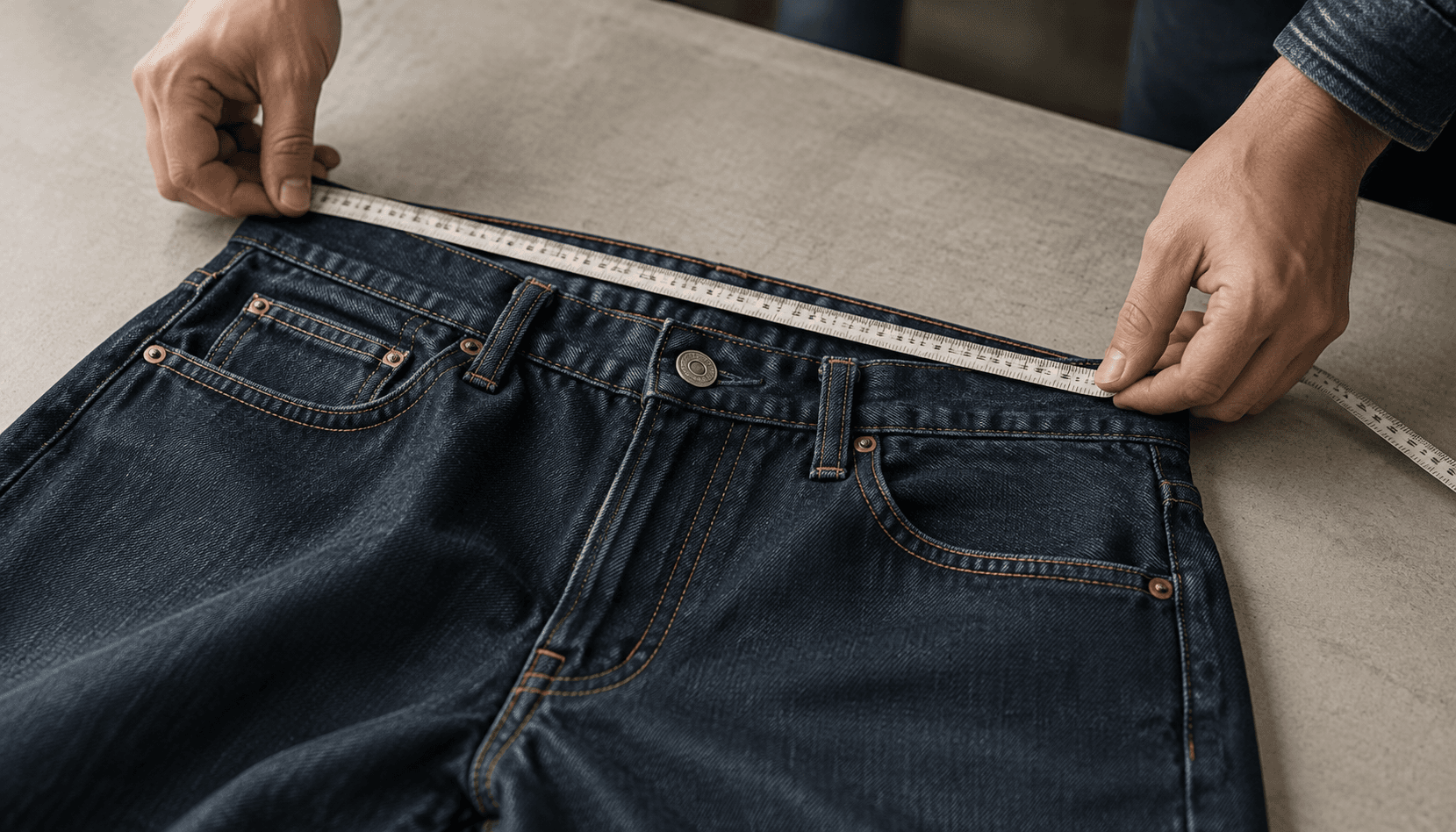
When you receive a jeans size chart, don't rush to ask the factory whether they can make it. The more practical question is: is every number on this chart clearly defined—how it's measured, in what unit, before or after wash, and how much deviation is allowed? How to choose a custom denim manufacturer largely comes down to whether they go through these questions with you item by item, rather than quoting a price first.
What a size chart typically leaves out
Waist, hip, front rise, back rise, inseam, thigh, and leg opening are the common key points on a jeans size chart. But the same "waist" can be measured along the waistband curve or straight across flat—the results differ; front rise measured from the cross seam to the bottom of the waistband versus the top edge of the waistband also differs by a noticeable amount. If a size chart only lists point names and numbers without measurement definitions, each side will measure according to their own understanding during sampling, and disputes will land on the sample garment.
Units must also be fixed. Mixing centimeters and inches, or how many decimal places to keep, both affect judgment. Pre-wash versus post-wash status is even more commonly omitted: denim fabric changes dimensions after washing, so whether the sample is measured before or after wash must match the labeling convention on the size chart.
Tolerances aren't about being as tight as possible—they need to be written into the confirmed version
Tolerance refers to the allowed range of dimensional deviation. It needs to be confirmed in writing by both parties before sampling, rather than waiting until the sample comes out to argue about whether "a little off" counts as acceptable. Different points can have different tolerance requirements—which are critical points that must fall within range, and which are acceptable handcraft variations—and these should be marked separately during review.
There is a documentation boundary here: specific tolerance values should come from the customer's target market requirements or mutual agreement, not from experience-based generic numbers. Tolerances that haven't been confirmed cannot serve as acceptance criteria.
When choosing a factory, see how they handle this documentation
To judge a custom denim manufacturer's collaboration habits, look at a few specific actions. After receiving the size chart, do they follow up on measurement methods, units, and pre-/post-wash status? Do they record required changes and acceptable variations separately? Does each round of revisions keep a version number, so that drawings, samples, and orders don't each tell a different story?
During sample review, consolidating feedback on fit, dimensions, fabric hand feel, color/wash, stitching, and trim placement in one summary—with photos marking the points and stating the target effect—is less prone to conflict than multiple verbal comments. Sample approval means both parties have settled on the production reference, but it does not mean details the customer hasn't confirmed can be decided by the factory on its own.
If the style involves workwear pockets, paneling, or special construction, size verification should also cover the positioning of these points. For how pockets correspond to construction, refer to the verification approach for denim workwear pocket and construction.
What reference materials can and cannot tell you
Model shots, flat-lay photos, and detail images in the product gallery can help communicate style structure and design direction, but cannot be used to judge composition, weight, stretch, or exact dimensions. When customers ask about the final finished effect, confirm back on samples, color, dimensions, and construction records.
Factory real-shot materials can illustrate actual production steps such as sewing and washing, but equipment counts, floor area, and certification information not confirmed in existing materials should not be added on your own. Treating showcase materials as proof of capability and treating reference images as specification basis are the same type of mistake. Custom development has sequential milestones from requirement communication to sample approval, and confirmation results at each stage should be synced to the latest version. For specific stage breakdowns, see denim custom development and private label services.
One thing you can do at the current stage
Add measurement definitions, units, pre-/post-wash status, and mutually agreed tolerance ranges to the existing size chart to form a cross-referenceable version, then send it to the factory along with reference styles and estimated quantities. The next thing to confirm is their review comments on this documentation—not to discuss price first.