How to use a denim garment quality acceptance checklist: first distinguish between available styles and custom development, then choose a custom jeans manufacturer
A purchasing guide for brands, wholesalers, and buyers. The article breaks the denim garment quality acceptance checklist into two sets of applicable conditions—available styles and custom development—and lists the materials to verify when choosing a custom jeans manufacturer: sample version, specification confirmation, inspection arrangements, and the boundaries of photo evidence. Suitable for readers comparing suppliers, preparing to place orders, or arranging inspections.
The acceptance checklist should have two sets of criteria—available styles and custom development: for available styles, verify sizes and quantities against the current order window; for custom development, use the approved sample and confirmed specifications as the verification basis. When choosing a manufacturer, look first at the boundaries of documentation rather than sample photos.
In this article
Acceptance of available styles: limited to the ordering window and actual deliveryAcceptance of custom orders: based on approved samples and specification versionsChoosing a custom denim manufacturer: verify the scope of documentation first, then look at imagesTurning the checklist into fillable fields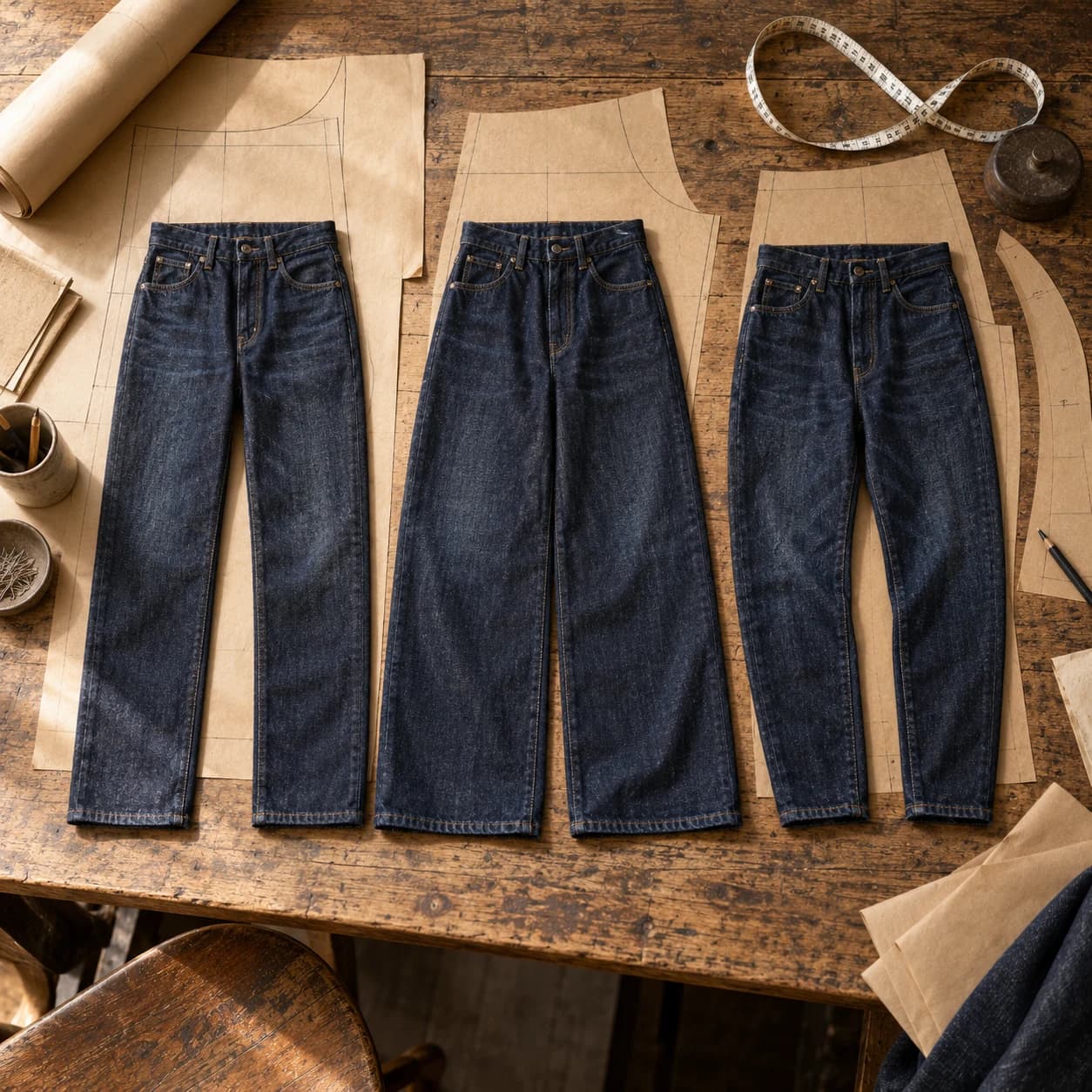
An acceptance checklist is not a one-size-fits-all form. Available styles and custom orders rely on different verification bases: for available styles, check the sizes, quantities, and shipping conditions shown in the current ordering window; for custom orders, check the mutually approved sample garments, confirmed specifications, and order terms. Mixing the two on a single checklist easily leads to errors such as "requiring custom orders to meet available-stock standards" or "using custom sample photos as proof of available inventory."
Acceptance of available styles: limited to the ordering window and actual delivery
For available styles, the starting point for verification is the sizes and quantities shown on the product card under "Start Ordering" or on the detail page under "Start Ordering · Select Quantity." The knowledge base does not store fixed inventory figures or long-term valid prices, so the size and quantity fields on the acceptance checklist should reflect what the window displayed at the time of ordering, and the order record should be retained.
Upon receiving available styles, you may check the style number, sizes, quantities, and appearance against the order. If sizes are missing, quantities exceed the available range, or design modifications are needed, contact the business team to confirm supply or move the discussion to custom development—rather than making a judgment directly on the acceptance form. Payment methods, discounts, and payment terms are subject to the actual settlement and order agreement.
Acceptance of custom orders: based on approved samples and specification versions
The acceptance basis for custom orders is not reference images but the mutually confirmed sample garments and specification versions. Before placing an order, the inspection requirements for garment dimensions, appearance, color variation, stitching, trims, and packaging should be clearly defined, with the approved sample and confirmed specifications serving as the verification basis.
During sample review, it is recommended to consolidate feedback on fit, dimensions, fabric hand feel, color and wash, stitching, trims, and label placement in one round, annotating areas on photos and stating the target effect. Distinguish between must-change items and acceptable variations, and retain version numbers and confirmation records for each revision round. Sample approval means both parties have established the production reference; it does not mean that details the customer has not confirmed can be decided by the factory at its own discretion.
If the customer requires a specified sampling plan, third-party inspection, or test reports, this should be raised in advance to confirm arrangements, costs, and responsibilities. Without documentation, do not promise a specific AQL level, pass rate, or certification. When deviations are found, record the style number, quantity, photos, and measurement results, and confirm the resolution with the business team.
Choosing a custom denim manufacturer: verify the scope of documentation first, then look at images
When choosing a custom denim manufacturer, one practical test is whether they can separate "confirmed" from "to be confirmed." A custom product gallery may include front and back model shots, flat-lay front and back views, and detail shots to communicate style structure and design direction; however, generated reference images do not prove the existence of physical samples, available inventory, real customers, or mass production capability, nor can they be used to derive accurate composition and process parameters.
When customers ask about the final finished product, guide them to confirm sample garments, colors, dimensions, and process records; image displays cannot replace formal specifications and sample confirmation. Factory real-shot materials may be used to illustrate the corresponding scenario, but whichever stage is shown should correspond to genuine materials from that stage. Equipment counts, factory floor area, employee numbers, third-party certifications, and customer lists that are not confirmed in existing documentation should not be supplemented or inferred by the buyer.
To learn about the scope of custom development and private label communication, see custom denim development and private label services; for production process descriptions, refer to the denim manufacturing process. Both are process entry points and do not constitute a commitment regarding capacity or lead times for specific styles.
Turning the checklist into fillable fields
A usable acceptance checklist should include at minimum: order number or style number, supply type (available or custom), verification basis (ordering window record or approved sample version number), inspection items, measurement method and units, deviation records, photo numbers, and resolution conclusions. Custom orders should also note the specification version and confirmation date.
Return and exchange conditions, costs, and responsibilities for available styles and custom orders are subject to the actual terms; the checklist itself does not replace the order agreement. The purpose of an acceptance checklist is to give the next round of verification a shared basis—not to use a single form to cover all supply conditions.