
Flap chest pockets are not decorative: for custom development of men's black denim jackets, settle this structural layer first
When developing custom men's black denim jackets, flap chest pockets are often treated as an appearance detail, but they actually affect fabric cutting pieces, sewing operations, and fit allowance. Starting from this structural difference, this article explains the size relationship between the flap and the pocket body, how layering allowance is checked through sample garments, and what to note during the confirmation stage for black washes and metal buttons, making it suitable for brands and buyers preparing to develop this jacket style to review before sampling.
Flap chest pockets in custom denim jacket development change fabric consumption, sewing operations, and layering allowance; confirm flap dimensions and inner-layer thickness before discussing pricing. Field order: title, summary, metaTitle, metaDescription, tldr; SEO fields must be independently condensed.
In this article
Flap and Pocket Body: Two Independent DimensionsLayering Allowance: The Layer Often Overlooked on Black JacketsBlack Wash and Metal Snap Buttons: Confirmation Order MattersFrom Reference Image to Sample: Fields to Write into the Brief
A flap chest pocket on a men's denim jacket is more than a visual element. It divides the front chest panel into several layers—flap, pocket body, and pocket bag—changing both the sewing operations and fabric consumption. When developing a custom denim jacket, if the flap chest pocket is treated as just a detail on a reference image, the sampling stage can easily run into repeated revisions over flap proportions, pocket body depth, and layering allowance.
Flap and Pocket Body: Two Independent Dimensions

A flap chest pocket usually consists of two parts—the flap and the pocket body—and each needs its own dimensions. The flap's width, height, and corner radius determine the front visual proportions; the pocket body's opening position, depth, and bottom corner shape affect actual use. With only a "chest pocket position" callout, the factory cannot tell whether the flap covers the pocket body opening or how deep the pocket bag needs to be.
In the men's black flap chest pocket denim jacket custom development reference style, the front structure includes double flap chest pockets and lower welt pockets. The spacing between the flaps and the welt pockets, and the distance from the flaps to the shoulder line, should all be written as specific values in the size chart rather than inferred from image proportions.
Layering Allowance: The Layer Often Overlooked on Black Jackets
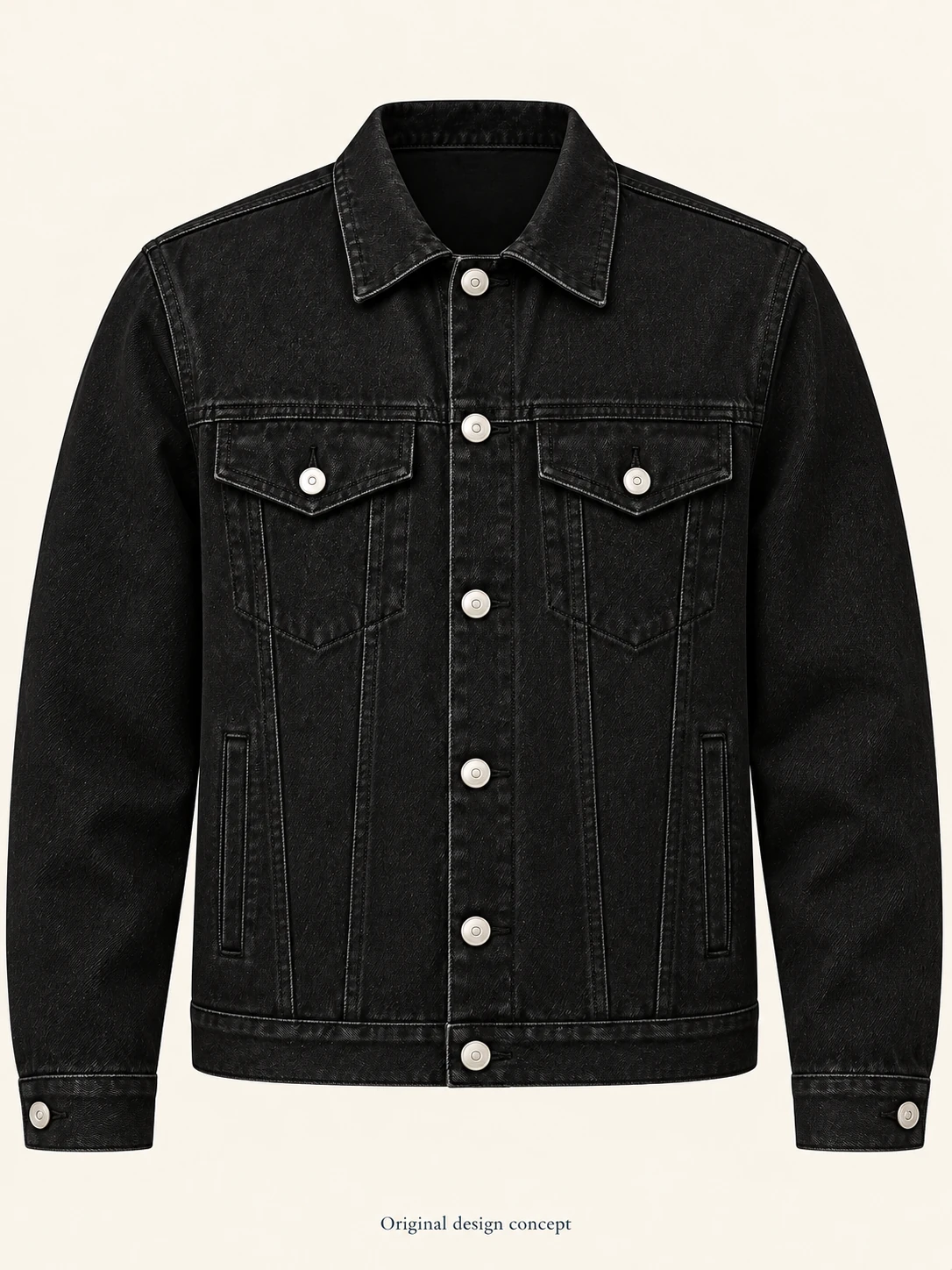
Men's black denim jackets are often worn as an outer layer, with a T-shirt, shirt, or thin sweatshirt underneath. The jacket's chest circumference and armholes need to allow room for movement with the inner layer, but this allowance is not a fixed value. Providing the thickness of the inner layer—for example, whether it is a regular T-shirt or a fleece-lined sweatshirt—is more useful than giving only a chest circumference number.
At the sample stage, the target inner layer can be worn for try-on to check whether the shoulders and back pull when raising the arms, and whether the front chest feels tight when buttoned. Fabric composition, weight, and post-wash changes are still to be confirmed for this reference style, so the layering allowance cannot be calculated from fabric stretch alone—it should be based on sample try-on records.
Black Wash and Metal Snap Buttons: Confirmation Order Matters
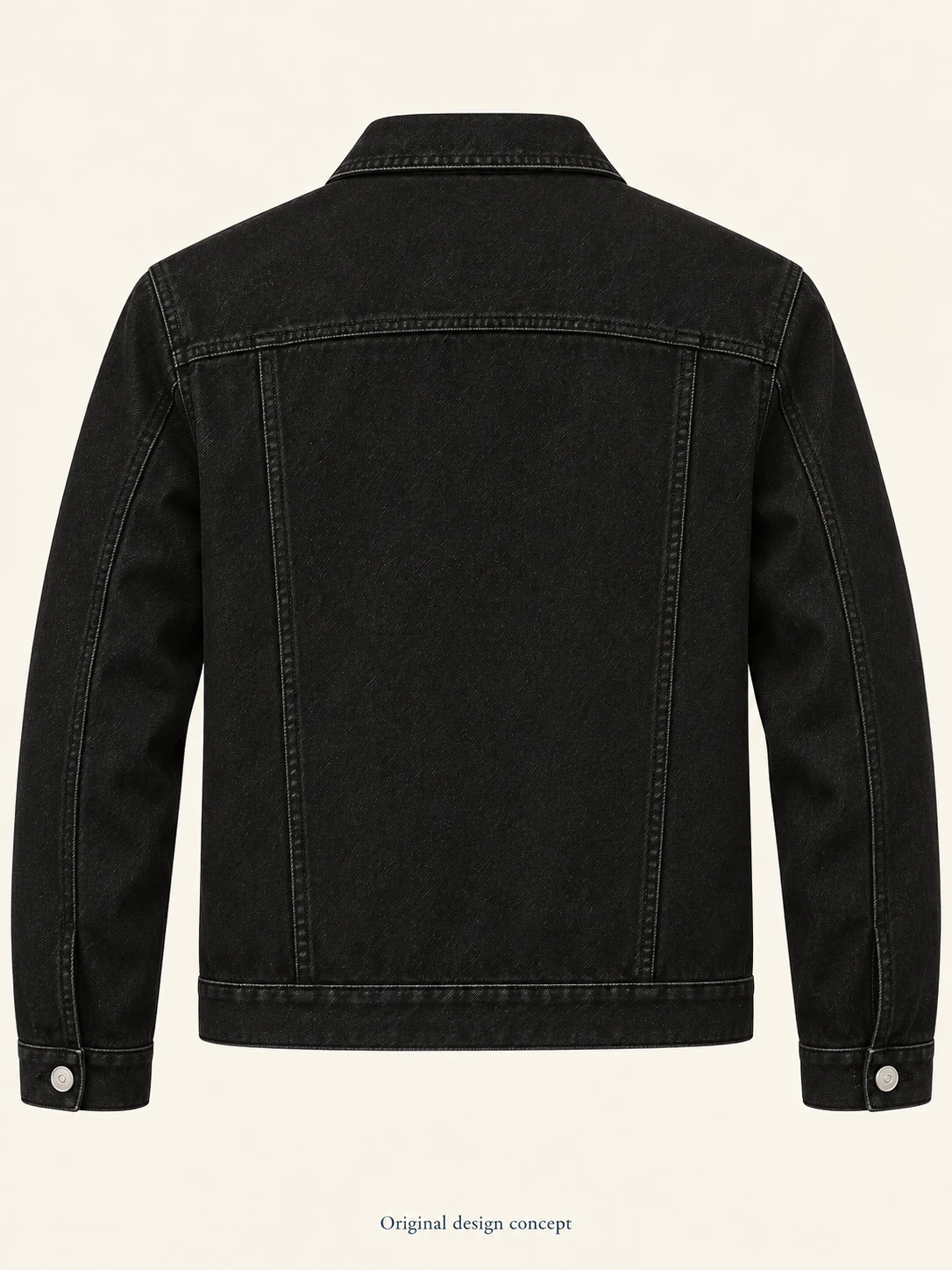
The wash effect on a black denim jacket affects the worn look at the flap edges and the overall color variation. Reference images are affected by lighting and screens and cannot serve as a color difference standard. Customers should provide a target color swatch or reference garment, specifying whether the black leans deep or gray-toned, and whether the flap edges need slight abrasion.
The position and number of metal snap buttons should be determined after the fit is confirmed. Changes in button spacing affect the flatness of the front placket and may also shift the visual center of gravity of the flap chest pockets. The color, size, and surface finish of trims need to be confirmed with physical samples or color cards—they cannot be arranged based on the words "metal snap buttons" alone.
From Reference Image to Sample: Fields to Write into the Brief
This jacket is an OEM/ODM custom development reference style, not an available stock item. Images and source reference specifications are not delivery commitments. Before sampling, it is recommended to write the following fields into the requirements brief: shoulder width, chest circumference, body length, sleeve length, inner layer thickness, flap width and height, pocket body depth, button spacing, target wash color swatch, and trim confirmation method.
If you are also looking at other lapel styles, the men's blue lapel denim jacket custom development has a different collar structure from the flap chest pocket style—collar stand height and collar leaf width affect the front chest proportions, so the two styles should not share the same size chart.
The custom decision for flap chest pockets ultimately comes down to whether the flap and pocket body dimensions are confirmed separately and whether the layering allowance has been checked through try-on. Until these two items are confirmed, quotations and lead times lack a basis for comparison.